

What is Carbon Fibre Plate?
Carbon fiber plates are a composite material made from carbon fiber strands and resin that are strong, lightweight, and durable. The manufacturing methods and material selection determine the plate's strength and stiffness.
Why Choose Us
High Quality
The main business is to produce various kinds of pultrusion, roll-wrapped, filament winding products based on carbon fiber, fiberglass and other advanced composite material.
Rich Experience
We can control the production process with our superior facilities, advanced technology and rich experience, and provide customization service from designing, processing, prototyping, testing to producing.
Quality Control
We have standard quality control system for each manufacturing process and make 100% inspection of the finished product before packed. Small quantity order is acceptable.
24H Online Service
We usually reply emails within 24 hours. If you need any support regarding our products, please contact us immediately.
-

Carbon Fiber Structural Plate For UAV & Drone Components
When building high-performance unmanned aerial vehicles (UAVs), every gram matters. The choice of carbon fiber components directly impacts flight time, payload capacity, and structural integrity. Our Add to Inquiry -
Carbon Fiber Honeycomb Panels
Zibo Runfeng CFRP supplies carbon fiber honeycomb panels in various sizes and with multiple sandwich options. These carbon fiber sandwich panels far surpass traditional metal or ordinary composite Add to Inquiry -
Glossy 3K Twill Surface Carbon Fiber Plate
Glossy 3K Twill Surface Carbon Fiber Plate has extremely high strength, light weight, with shiny and clear 2x2 woven appearance. The carbon boards be widely used for model helicopter parts and hobby Add to Inquiry -
Matte 2X2 Twill Carbon Fiber Plate
*Stiff with lightweight but less density. *Matte 2X2 Twill Carbon Fiber Plate Excellent electrical conductivity. *High-temperature resistance and corrosion resistance. *Customized size, CNC, and logo Add to Inquiry -
2.5mm Carbon Fiber Sheet
Item Name: 2.5mm Carbon Fiber Sheet. Dimension: 500mm x 500mm. Thickness: 2.5mm (0.2mm-60mm available). Surface: 3K, Twill Weave/Plain Weave, MATTE/GLOSSY Finish. Features: Strength and Light Weight Add to Inquiry -
0.5 mm Carbon Fiber Board
*0.5 mm Carbon Fiber Board Stiff with lightweight but less density. *Excellent electrical conductivity. *High-temperature resistance and corrosion resistance. *Customized size, CNC, and logo service Add to Inquiry -
10 mm Carbon Fibre Sheet
100% 3K Carbon Fiber Strong Strength and Light Weight.. Perfect for any application including RC, drones, helicopters, etc.. The surface is plain or twill weave, matte surface without any glass fiber Add to Inquiry -
Carbon Fiber Unidirectional Sheets
*Carbon Fiber Unidirectional Sheets Good electrical conductivity . *High-temperature resistance and corrosion resistance . *Customized size, CNC, and logo services are also available Add to Inquiry


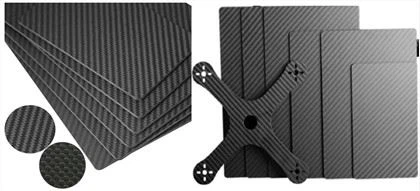



Our carbon fibre plate has excellent quality and performance since they are made of carbon fiber and epoxy resin, which is then compressed and cured with a low percentage of glue. Both sides of them have a smooth, glossy or matt appearance. Applications for the carbon boards are numerous and include engineering, robotics, architecture, marine, aerospace, and a variety of sports. We can provide you plates with customer's drawing.
Different Types of Carbon Fiber Plates
Autoclave-Cured Carbon Fiber Plates
Autoclave-cured CF plates are made by laying multiple layers of carbon fiber fabric and resin into a mold, which is then placed into an autoclave. The autoclave applies pressure and heat to the mold, causing the resin to cure and the fibers to bond together. This process results in a high-quality, lightweight, and strong carbon fiber plate.
Advantages of Autoclave-Cured CF Plates
High strength-to-weight ratio
Excellent bonding strength between the fibers and the resin
Consistent and uniform thickness
Hand-Laid Carbon Fiber Plates
Hand-laid CF plates are made by laying multiple layers of carbon fiber fabric and resin by hand, in a similar fashion to vacuum infusion sheets. Hand-laid plates are then placed under pressure to ensure a uniform distribution of resin and to minimize the voids or air pockets that may form during the curing process.
Advantages of Hand-Laid CF Plates
Low manufacturing cost
Simple manufacturing process
Short lead time for production
How Strong is a Carbon Fiber Plate?
Carbon fiber plate is a composite material composed of carbon fiber strands and resin. The resulting product is light, yet strong and durable. Carbon fiber plates come in many different types to fit a variety of applications and industries, including automotive and aerospace. In this blog post, we will take a closer look at where carbon fiber plates are used and how strong they are in comparison to other materials.
Where Carbon Fiber Plates are Used?
Carbon fiber sheets and plates are used in a variety of industries, including automotive, aerospace, musical instruments, sporting goods, and medical devices.
In the automotive industry, carbon fiber plates can be used to reinforce parts of a car, such as doors, hoods, bumpers, fenders, and roof rails. Automobile manufacturers often use steel to build these components. Though less expensive, steel is much heavier than carbon fiber. In order to make vehicles such as race cars lighter, carbon fiber plates are often used in the place of many steel parts.
In the aerospace industry, carbon fiber plates are used to make aircraft parts, such as fuselage panels, control surfaces, and wingtips. The resulting components are lightweight, yet strong and durable. Carbon fiber has been widely adopted by the aviation industry because of its superior strength-to-weight ratio. Since carbon fiber has such a beautiful appearance, it is also an ideal choice for airplane interiors.
Similar to automobiles, materials like aluminum and steel are often used to manufacture airplanes. However, commercial airlines are progressively making greater use of carbon fiber composites to build lighter stronger aircraft bodies. This is because carbon fiber is significantly lighter than steel, lighter and stronger than aluminum, and can be formed into any shape.
How Strong Are Carbon Fiber Plates?
When comparing carbon fiber to other materials, such as steel and aluminum, many properties are considered. Here are just a few:
Modulus of elasticity = The "stiffness" of a material. The ratio of stress to strain for a material. The slope of the stress vs strain curve for material in its elastic region.
Ultimate tensile strength = The maximum stress a material can withstand before breaking.
Density = The material's mass per unit volume.
Specific stiffness = Modulus of elasticity divided by the material's density, used for comparing materials with dissimilar densities.
Specific tensile strength = Tensile strength divided by the material's density.
Carbon fiber plates have a very high strength-to-weight ratio. This means that they are much stronger than other materials of the same weight. For example, the specific strength of carbon fiber is almost 4 times that of aluminum. This makes carbon fiber plates the ideal material for a wide variety of applications where weight is a factor.
While both carbon fiber and steel are very resistant to deformation, steel is 5 times denser than carbon fiber. The strength-to-weight of carbon fiber is almost twice that of steel.
Machining Carbon Fiber: What You Need to Know


Carbon fiber machining has transformed several industries with its durability and excellent strength-to-weight ratio. Composite materials like carbon fibers are versatile and efficient materials driving vast manufacturing innovations. Carbon fiber surpasses conventional CNC machining materials such as aluminum, steel, wood, or glass. It creates high-performance, durable, and low-weight components.
Machining carbon fiber sheets is generally accomplished using a router. However, other standard machining methods are also effective. The process is high speed spindle driven with lower feed rates to give the best results.
Carbon fiber comprises 5 to 10 microns in diameter strands of fibers consisting of long, closely interlocked chains of carbon atoms in a microscopic crystalline form. These fibers are solid and very light in weight. Carbon fiber is more firm and rigid than steel and lighter than steel.
Carbon sheets are famous for their incredible strength and durability, making them suitable for various sporting, engineering, and aerospace industries and more applications. Carbon fiber is a lightweight composite with excellent toughness, hardness, and resistance to abrasion and corrosion.
Other properties of carbon fiber include:
Low thermal expansion
EM transparency
Appealing cosmetic appearance
Good electrical conductivity
How to Machine Carbon Fiber Sheets
Machining carbon fiber composites should be done with the highest accuracy. It is expensive to machine carbon fiber. Hence, wrong cuts or millings should be avoided or mitigated at all costs. Here are some of the efficient ways of machining carbon fiber sheets:
CNC Turning
CNC turning is a common technique for machining carbon fiber parts in different industries. It offers predetermined dimensional tolerances on components with generally circular surfaces. Possible tools for turning carbon fiber include ceramic, cemented carbide, polycrystalline diamond, and cubic boron nitride.
Turning process parameters such as cutting speed, feed rate, and depth of cut influence the tool life and CNC machining surface quality. However, it is essential to note that the tool's geometry and the feed rate play crucial roles in determining the surface roughness of the carbon fiber parts.
CNC Milling
Generally, machinists use a router to machine carbon fiber composites. You can cut carbon fiber sheets to size and add the required features. Nevertheless, you can employ standard metal machining methods if needed.
CNC milling carbon fiber composite requires higher spindle speeds than metals and lower feed rates. However, too much heat can affect the quality of the composite parts. As a result, you can adjust the feed rates to reduce the heat generated in the workpiece while machining.
Carbon fiber has a relatively low thermal conductivity which causes the workpiece to retain most of the heat generated, as there are no chips to help disperse the heat during machining. However, this heat generated from the cutting operation may damage the resin.
The tool and the tool path must be used to manage the heat in workpieces while machining since using coolants may not be viable. Also, the fracturing of the fibers causes significant abrasion on the cutting tool. As a result, you need special tooling to machine carbon fiber composites.
Drilling
Drilling is a complicated machining process used in machining carbon fiber composites. These composites comprise material layers that could easily chip or wear away during precision machining. In addition, machining carbon fiber generates conductive dust that can invade and damage electronics, irritating the skin.
Hence consider using a dust mask and gloves when machining carbon fiber. The drilling speed is a crucial factor in dust emission and must be calibrated based on the size and depth of the hole. Using special drill bits specially made for carbon fiber helps prevent delamination when drilling.
Waterjet
Waterjet machining is a fast and reliable technique for cutting carbon fiber composites. The advantage that waterjet cutting has over others is that it requires no special tool to cut carbon fiber materials.
It is an effective dust containment solution as it traps dust particles in the water. However, delamination may occur if you fail to drill a starting hole. Whenever tight tolerances are needed, it is advisable to waterjet the large part and adjusts it to the final dimensions.
Top 3 Tips for Machining Carbon Fiber Composites
There are some helpful tips to consider when machining composites to get the best achievable results. Here are some of them.
Improve the Wear Resistance of the Drill Bit
The cutting temperature is not high when drilling carbon fiber composites, generally between 50~200℃. The tool wear curves are very similar at different cutting speeds. Therefore, the leading cause of tool wear is abrasive wear.
The hardness of carbon fiber is relatively high. The hardness of carbon fiber made of petroleum coke or carbon black is generally up to HS70~ 90 or above. It is equivalent to HRC53~65 Rockwell hardness, while the hardness of an HSS drill is only HRC62~65 at room temperature, very close to that of carbon fiber composite materials.
Therefore, when processing carbon fiber composite materials with an HSS drill, the hard fiber points in the material cause severe abrasive wear on the tool's surface. For this reason, high-hardness tool materials must be used. High-hardness tool materials include hard alloys, ceramics, cubic boron nitride, diamond, etc.
Prevention and Control of Dust Pollution
Water-based cutting fluid can be added to the drilling process so that the dust particles are removed by water-based cutting fluid and not dispersed to the air. It helps to solve the problem of pollution when making holes.
The test of drilling carbon fiber composites shows that adding water-based cutting fluid does not affect tool durability and hole quality.
However, robot drilling is undoubtedly a better choice to keep people away from the dust pollution environment. Using robot drilling helps monitor the process of hole-making and to further ensures the accuracy of hole-making.
Adopt Reasonable Technology
The test results show that the surface roughness of the holes can be reduced, and the roundness of the holes can be improved effectively by using the Reaming technology after drilling. The surface roughness of carbon fiber composite on the rear wall of Reaming is not less than Ra3.2.
Reaming knife is generally made of hard alloy Reaming knife, and the cutting speed is selected at about 30m/min. In addition, the hole of carbon fiber composite material can be successfully processed using the Reaming composite tool.
Why Use Carbon Fiber?
Carbon fiber (also known as carbon fibre) stands out in the materials world as one of the strongest and most lightweight materials on the market. Five times stronger than steel and one-third its weight, carbon fiber composites are ideal for any application that requires strength, durability, lightweight, and speed. You'll see it most commonly in aviation and aerospace, robotics, medical equipment, unmanned aerial vehicles, race cars, boats, and all kinds of sports equipment from paddles and racquets, and bicycles to kayaks. And that doesn't even count all the ways it's used just for the way it looks!
Standard Thicknesses For Carbon Fiber
Standard thicknesses vary slightly among manufacturers. Our carbon fiber sheets range from 0.25mm (.010") to 3.4mm (.133") carbon fiber plates. Custom thicknesses up to .5" are available on request. We specialize in manufacturing customized layups, incorporating different materials and weaves as needed, to address the specific needs of your application.
Cutting Carbon Fiber
Thin carbon fiber sheets (up to .5mm) can be cut with scissors or a sharp razor knife. For thicker carbon fiber plates and panels, abrasive cutting wheels and Dremel tools are best. We recommend using carbide tools, abrasive type cutters, or diamond-crusted blades. Regular steel tools will do the job, but carbon fiber's strength and abrasiveness will wear down standard tools quickly. Once your piece is cut, you can sand the edges very lightly with 220 grit sandpaper for a smooth, clean edge.
Adhesive Options
Our favorite adhesive is a high-performance, high-temperature film made by 3M because it's quick, clean, easy to use and it holds a strong, tight bond. Rated at 400 degrees Fahrenheit, this adhesive will easily withstand the heat demands of most applications.
However, any other contact cement or adhesive will do the job. If you go this route, it's absolutely critical that the adhesive is fully dry before pressing it to its application. Any trapped moisture will create a chemical reaction with the resin in the sheet and create bubbles on the surface over time.
High Temp Panels
Our high-temperature carbon fiber panels are made with a specially formulated high-temperature, high-strength epoxy resin. The result is a lightweight carbon panel that can withstand heat as high as 400 degrees Fahrenheit with little thermal expansion. All our high temp panels are customized to your size and thickness needs. Panels using this resin system can be made in any thickness from .25mm to over ¾" and in dimensions up to 4' x 8'.
Molded Parts
Molded carbon fiber parts are generally made in two ways. One option utilizes prepreg – carbon fiber fabric that's been pre-impregnated with resin. It's laid into the mold and heated in an oven or autoclave until it's cured and set.
Vacuum infusion is the second alternative. In this case, raw carbon fiber fabric is draped over a mold and infused with epoxy resin. we offer both, depending on the needs of the project.
Like our sheets and panels, all products are made with 100% carbon fiber. Additional cutting, drilling, and finishing can be included as needed to provide you with a completed part. We'll use your mold or work with you to create one.
Machining Carbon Fiber
CNC machining is the most common method for cutting carbon fiber parts; water-jetting can also be a good option. Many machinists avoid carbon fiber because it dulls bits quickly and the dust clogs their machines. If you're shopping for a machinist, be sure they're experienced with cutting carbon fiber as it cuts differently than other materials.
Our Factory
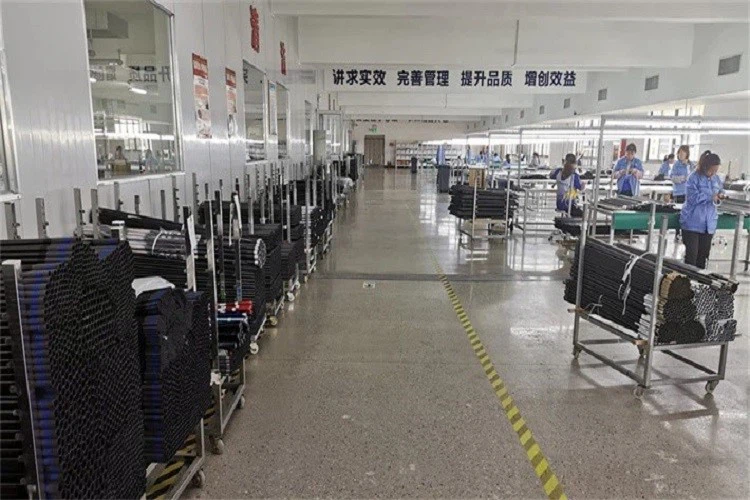
Shandong Runfeng CFRP Co., Ltd was founded in 2010, and located in Shandong, China. We assist customers in the development and manufacture of carbon fibre, glass fibre, and aramid fibre products. Our products are widely used in areas of high-end industrial machinery, medical equipment, intelligent robot, security equipment, transportation, marine antenna, sporting goods, photography facilities, etc. With superior facilities, advanced technology and good quality, we provide one set-up customization service from designing, mold making, prototyping, testing, producing to transportation.

FAQ
We're professional carbon fibre plate manufacturers and suppliers in China, specialized in providing high quality products and service. Please rest assured to buy customized carbon fibre plate at competitive price from our factory. Contact us for more details.
carbon fiber sheets for race cars, carbon fiber fabric sheets, forged carbon fiber plate