

What is Unidirectional Carbon Fibre Tube?
Unidirectional (UD) carbon fiber tubes are made from UD carbon fiber fabrics and prepregs, and are characterized by their fibers running in a single, parallel direction. This orientation of the fibers gives the tubes strength and stiffness.
Why Choose Us
High Quality
The main business is to produce various kinds of pultrusion, roll-wrapped, filament winding products based on carbon fiber, fiberglass and other advanced composite material.
Rich Experience
We can control the production process with our superior facilities, advanced technology and rich experience, and provide customization service from designing, processing, prototyping, testing to producing.
Quality Control
We have standard quality control system for each manufacturing process and make 100% inspection of the finished product before packed. Small quantity order is acceptable.
24H Online Service
We usually reply emails within 24 hours. If you need any support regarding our products, please contact us immediately.
-

Carbon Fiber Robotic Arm
Service:Design , analysis , prototyping and production. Key word: carbon fiber robot arm, carbon fiber auto arm, carbon fiber long arm. . Carbon fiber robotic arm is a high-tech mechanical device, Add to Inquiry -
Twill Weave Carbon Fiber Auto Motorcycle Parts
Twill weave carbon fiber auto motorcycle parts are a high-performance vehicle accessory that is very helpful in improving driving comfort and control. The carbon fiber auto motorcycle parts are Add to Inquiry -
Plain Weave Carbon Fiber Car Auto Parts
The plain weave carbon fiber car auto parts are made with standard modulus carbon fiber material, with plain weave surface, can be painted in matte or glossy. Add to Inquiry -
Matte Carbon Fiber Car Accessories
The matte carbon fiber car accessories are produced with standard modulus carbon fiber material, with 2x2 twill or plain weave surface, painted in matte. Add to Inquiry -
Glossy Surface Carbon Fiber Auto Exhaust Pipe
Glossy surface carbon fiber auto exhaust pipes are high-end products in automotive accessories, made of carbon fiber and resin composites. Compared with traditional stainless steel exhaust pipes, Add to Inquiry -
2x2 Twill Carbon Fiber Auto Accessories
2x2 twill carbon fiber auto accessories are made of standard module carbon fiber material, with 2x2 twill weave and painted high gloss surface. Add to Inquiry -
Glossy Carbon Fiber Auto Motorcycle Accessories
*Made from High-grade carbon fiber material for durability. *Clear Grain and Smooth Surface. *Precision tolerance controlled to fit your vehicles perfectly. *Sensible price Add to Inquiry
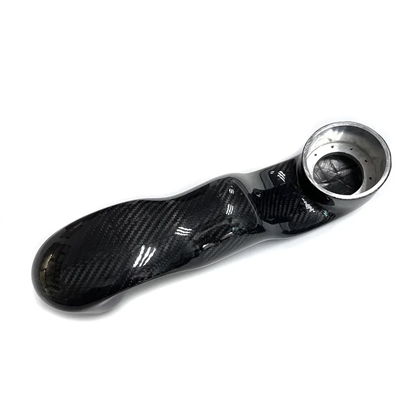


Most of our carbon fiber parts are manufactured in autoclave process. Autoclave processing is the most common method used for curing thermoset prepregs. The curing of thermoset composites involves both mechanical and chemical processes. Mechanically, pressure is applied to remove trapped air and volatiles, and to consolidate the individual plies and fibers. Chemically, a crosslinking reaction must be initiated and taken to completion to form a rigid matrix. Crosslinking is most commonly initiated through the application of heat, though it also may be initiated by exposure to ultraviolet light, microwaves, or high-energy electrons (e-beam curing). In the autoclave process, high pressure and heat are applied to the part through the autoclave atmosphere, with a vacuum bag used to apply additional pressure and protect the laminate from the autoclave gases. The cure cycle for a specific application is usually determined empirically and, as a result, several cure cycles may be developed for a single material system, to account for differences in laminate thickness or to optimize particular properties in the cured part.
Why Carbon Fibre is Used in Cars?
Since the 1980s, carbon fibre has been largely adopted by leading automobile brands. Initially, it was only limited to sports and racing cars, but now, it is also used in conventional cars. Currently, carbon fibre wheels are used in EVs to increase their efficiency. That said, here we have listed all the reasons or advantages of carbon fibre in cars.
Higher Durability
Higher durability and strength are one of the core reasons for using carbon fibres in vehicles. The strength-to-density ratio of carbon fibre is higher than any other metal used in vehicle manufacturing. Moreover, carbon fibre is rust-proof which increases its durability more contrary to metal auto parts.
Ideal Weight-to-Speed Ratio
The carbon fibre car parts provide an edge over the metal auto parts, because of their weight-to-speed ratio. The carbon fibre parts are five times lighter than metal and therefore, are ideal for higher agility cars. On average, it can reduce the overall car weight by 60%, which helps cars reach top speed in less time.
Thermal Friendly
Unlike metals, carbon fibre is a poor conductor of heat energy, making it ideal for petrol and diesel engines that produce a lot of heat energy. Lower conductivity makes it easier to manage heat from the engine and also reduces strain on the car cooling system. Alongside this, the lower conductivity also reduces the potential chances of cars catching fire in case of an accident.
Elevate Aesthetics
Car parts like carbon fibre hoods or chassis aid in elevating the overall aesthetics of the car. This is mainly due to the unique texture carbon fibre provides to the exterior. Apart from company-fitted parts, carbon fibre is also commonly used for car wrapping. Several car wrap shops in Dubai and other Emirates can enfold cars in carbon fibre on customer demand.

3 Parts of Carbon Fiber Production
The first part is the pre-preg process, which involves making carbon fiber sheets. Carbon fibers are woven into uniform strands. Then, heated together creating pre-impregnated sheets.
After that, fabrication is next. Raw material like epoxy resin forms a pre-fabricated composite. This includes mixing and applying unidirectional curing resins.
The product is ready once cured under high-temperature polymerization.
The final process is post-preg processing. Therefore, this requires more resin added to the pre-fabricated composite and cured.
The custom carbon fiber parts are light. They are strong enough to withstand live loads of 600 pounds per square inch without failure. Other benefits of using carbon fibers include:
High tensile strength compared to weight ratio
High fatigue strength
A low thermal expansion rate
Improved stiffness to weight ratio
What Industries and Applications Use Carbon Fiber Parts?
When you are looking for materials to use in your business's products, you need to supply yourself with the sturdiest, most reliable, and most applicable components possible.
As you might already know, that is significantly easier said than done. Amongst the many possibilities for product materials, one stands out above them all in composition and overall reliability: carbon fiber.
Carbon fiber is a polymer, specifically a synthetic fiber, that is both exceptionally sturdy and lightweight. Carbon fiber is ten times stronger and 5 times lighter than steel and 1.5 times lighter than aluminum.
Carbon fiber can vary in size and thickness. For just one example, one carbon fiber tow can be even thinner than a human hair! Carbon fiber parts are typically comprised of carbon fibers strategically interwoven, which provides the final product with unequivocal strength. Carbon fiber can be laid over a mold then coated in plastic or a resin, resulting in various sturdy parts.
How Is Carbon Fiber Made?
The creation of carbon fiber is meticulous and involves both chemical and mechanical processes. First, fibers are laid out and heated at a very high temperature, usually near 1800°F/982°C. The fibers are deprived of any oxygen exposure in order to keep them from burning.
This high heat process is where carbonization occurs, which essentially means almost all atoms are expelled from the fibers except for carbon. What then results is tightly-locked carbon atoms with only a small amount of other atoms present. The result is carbon fiber tows that are bundled together and woven into fabric in different weights and weave patterns.
What Are the Benefits of Using Carbon Fiber?
As mentioned above, carbon fiber exemplifies numerous qualities most manufacturers of various products are looking for, such as strength, lightweight, and versatility. It also provides them with a material that has high chemical resistance, high tensile strength, is exceptionally tolerant of excessive heat, and has low thermal expansion.
Carbon Fiber in Various Industries
But how exactly are carbon fiber parts utilized in various industries? In short, a multitude of ways because carbon fiber is truly an impressive and adaptable material. Let's take a closer look at the industries in which carbon fiber is utilized the most often and where it can be applied for optimal performance.
Knife Manufacturing
The manufacturing of sturdy and reliable knives is quite heavily reliant on carbon fiber, more specifically the manufacturing of knife handles. Knife handles are made of various materials, some of the most popular being carbon fiber, micarta, G-10, several natural materials (wood, bone, antler, etc.), aluminum, fiberglass reinforced nylon (FRN), and titanium.
Carbon fiber is one of the most reliable materials for knife materials because of it's chemically stable, light, strong, and not absorbent. It also provides each knife it's used in with a premium appearance and feel.
Robotics
When it comes to robotics, there are only a handful of materials that can be effectively utilized, such as steel, rubber, aluminum, and carbon fiber. Carbon fiber supply robotics with exceptionally strong parts to allow for seamless mobility, automation, precision, motor skills, and other tasks.
Plus, carbon fiber provides robotics with necessary lightweight components so that it can have overall increased performance and reliability.
Manufacturing of Consumer Products
When it comes to manufacturing products, not all materials are built the same. Sometimes, common items that are used in the manufacturing industry, like aluminum, steel, and plastic, simply won't cut it.
Carbon fiber can properly be included in the manufacturing process to supply products with unparalleled durability, strength, and lightweight capabilities. This unique material might just be the saving grace in the manufacturing process for countless products, as it finally provides them with the qualities many products require, whether they be boats or toys.
Aviation
When it comes to creating aviation products, having sturdy and reliable components is undeniably goal number one during design and development. This is because every aircraft, whether it be an airplane or a spacecraft, needs to be able to withstand various temperatures and high-pressure conditions without a semblance of potential failure or error.
Carbon fiber parts are found in various sizes and applications in nearly all aviation vehicles, including military aviation crafts, in objects such as large panels and gauges along with smaller switches and support screens.
Drones/UAVs
Much like larger aviation vehicles can reap the benefits of carbon fiber parts, as can the smaller ones, such as UAVs (unmanned aerial vehicles). UAVs require carbon fiber in order to effectively and efficiently accomplish all of the tasks that are necessary, which include taking off, flying, making sharp turns, hovering, and withstanding numerous weather conditions while airborne.
Carbon fiber can be found in nearly every inch of drones, specifically the rotor and fixed wings. This is because these components, among the many, require this particularly versatile material for proper strength, corrosion resistance, and lightweight features.
Medical
When it comes to our health, we deserve only the best and high efficiency– and that includes the various pieces of equipment and devices that allow for diagnosis, treatment, and other healthcare processes. That is precisely why carbon fiber is also readily used in the medical industry.
Carbon fiber can be found in large pieces of equipment, such as MRI and x-ray machines, but also in more practical applications for day-to-day life for some patients, such as prosthetic limbs. Since there is an exceptionally low tolerance for error in this industry, only the most reliable of materials are allowed, hence the high prevalence of carbon fiber.
Maintenance and Care of Carbon Fiber Parts
Carbon fiber parts are widely used in various sectors, from the aerospace industry to automotive and sports. Their high strength and lightweight make them an ideal choice for many applications. However, proper maintenance and care are essential to ensure optimal performance and prolong their lifespan. we will provide you with practical tips to keep your carbon fiber parts in excellent condition.
Regular Cleaning: Regular cleaning is crucial to remove any dirt or particles that may accumulate on the surface of carbon fiber parts. Use a soft, non-abrasive cloth to remove dust and residue. Avoid using aggressive chemicals as they could damage the carbon fiber finish. Instead, opt for warm water with a mild detergent if necessary.
UV Protection: Carbon fiber parts can be affected by the sun's ultraviolet radiation over time. To protect them, apply a layer of wax or specialized sealant specifically designed for carbon fiber. This will help preserve their shine and prevent deterioration caused by UV rays.
Avoid impacts and scratches: Although carbon fiber parts are resistant, they can still suffer damage if heavy or sharp objects are placed on them. Avoid placing such objects on the parts and, if possible, store them in a secure place when not in use. In case of accidents or minor damages, it is advisable to consult a specialized professional for repair.
Periodic Inspection: Proper maintenance and care of carbon fiber parts are key to ensuring their proper functioning and prolonging their lifespan. By following regular cleaning practices, protecting against UV rays, preventing impacts and scratches, and conducting periodic inspections, you will be able to enjoy your investment in carbon fiber for a long time. Also, remember to follow the manufacturer's specific instructions, as each part may have particular requirements.

Our Factory
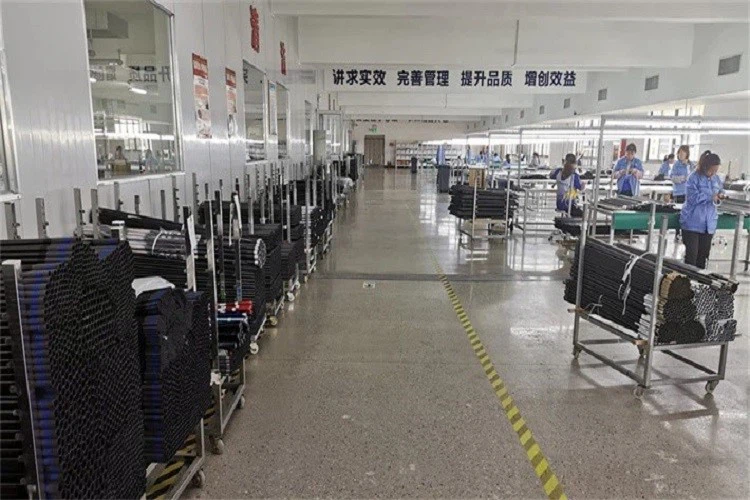
Shandong Runfeng CFRP Co., Ltd was founded in 2010, and located in Shandong, China. We assist customers in the development and manufacture of carbon fibre, glass fibre, and aramid fibre products. Our products are widely used in areas of high-end industrial machinery, medical equipment, intelligent robot, security equipment, transportation, marine antenna, sporting goods, photography facilities, etc. With superior facilities, advanced technology and good quality, we provide one set-up customization service from designing, mold making, prototyping, testing, producing to transportation.

FAQ
We're professional carbon fiber parts manufacturers and suppliers in China, specialized in providing high quality products and service. Please rest assured to buy customized carbon fiber parts at competitive price from our factory. Contact us for more details.
carbon fibre bonnet wrap, Carbon Fiber Parts, customized carbon fiber helmet