

What is Kevlar Tubes?
Kevlar tube is crafted from 100% pure Kevlar, this tube is designed to endure high temperatures and long-lasting addition to your fire performance gear.
Why Choose Us
High Quality
The main business is to produce various kinds of pultrusion, roll-wrapped, filament winding products based on carbon fiber, fiberglass and other advanced composite material.
Rich Experience
We can control the production process with our superior facilities, advanced technology and rich experience, and provide customization service from designing, processing, prototyping, testing to producing.
Quality Control
We have standard quality control system for each manufacturing process and make 100% inspection of the finished product before packed. Small quantity order is acceptable.
24H Online Service
We usually reply emails within 24 hours. If you need any support regarding our products, please contact us immediately.
-

Kevlar Weave Carbon Fiber Tube
Kevlar weave carbon fiber tube offers unmatched strength, durability, and versatility in the realm of advanced engineering. The combination of carbon fiber and Kevlar creates a material that Add to Inquiry -
Carbon Fiber And Kevlar Tubes
Carbon fiber and Kevlar tubes are revolutionizing the field of engineering with their exceptional qualities, combining strength, lightweight construction, and durability. These tubes, composed of Add to Inquiry -
Carbon And Kevlar Fiber Rods
Carbon and kevlar fiber rods are revolutionizing the world of engineering with their impressive combination of strength, lightweight construction, and durability. The carbon aramid kevlar pipes are Add to Inquiry -
Blue Kevlar Carbon Fiber Pipes
Blue kevlar carbon fiber pipes combine the formidable properties of Kevlar and carbon fiber, resulting in a product that pushes the boundaries of performance. The use of Kevlar enhances the pipe's Add to Inquiry -
Customized Carbon Kevlar Tube
Kevlar is commonly known as fire-resistant fiber. This new type of material has gained attention due to its low density, high strength, good toughness, high-temperature resistance, and ease of Add to Inquiry -
Carbon Fiber Kevlar Tubes
Carbon Fiber Kevlar Tubes are Durable and high-temperature resistant,as well as Wear-resistant, they are very popular in Outdoor multi-applications. Add to Inquiry


Runfeng CFRP manufacture and export an extensive range of light weight and high performance carbon fiber composite tubes to the market for various applications. Our manufacture process of carbon composite tubes are roll-wrapped, filament winding and pultrusion. We choose the right process to manufacture tubes based on the tube sizes, surface look and strength requirement. Materials of composite tubes are carbon fiber, carbon fiber and fiberglass hybrid, fiberglass and carbon kevlar. Shaped of carbon composite tubes can be round, oval, square, rectangular, octangal, hexongal and bent shapes .
Carbon fiber kevlar tubes come with great performance because it not only increased by the strength of kevlar fiber, but also retains the stiffness of carbon fiber.
Key Features of Kevlar Tubes
Exceptional Durability
Kevlar tube is made from 100% pure Kevlar, our tube offers outstanding durability and resistance to wear and tear, providing a long-lasting solution for your fire performance needs.
High Heat Resistance
Kevlar is renowned for its ability to withstand extreme temperatures, making it perfect for fire performance equipment. This tube retains its strength and integrity even under intense heat, ensuring your safety and the longevity of the product.
Optimal Flexibility
Despite its robustness, the Kevlar tube remains flexible and easy to handle, allowing for smooth and precise movements during performances.
Versatile Applications
Suitable for a variety of fire performance tools, including poi, staff, and custom fire props, our Kevlar tube adapts to your specific requirements.
Types of Carbon Fiber Tubes
Carbon fiber tubes come in various types, each designed to meet specific performance and application requirements. The main types include unidirectional, woven, and braided carbon fiber tubes. Understanding the differences between these types is crucial for selecting the right tube for your project.
Unidirectional Carbon Fiber Tubes
Unidirectional (UD) carbon fiber tubes are made from carbon fibers that are all aligned in a single direction, typically along the length of the tube. This alignment maximizes the strength and stiffness in the direction of the fibers, making UD tubes ideal for applications requiring high tensile strength and stiffness along the tube's length. Examples include aerospace components, structural beams, and sporting goods such as arrow shafts. The tensile strength of UD carbon fiber tubes can reach up to 3.5 GPa, with a modulus of elasticity around 230 GPa. These tubes offer superior performance in applications where the primary load is along the fiber direction, providing maximum efficiency and reliability.
Woven Carbon Fiber Tubes
Woven carbon fiber tubes are constructed from carbon fibers woven into a fabric before being rolled into tubes. The woven pattern provides strength and stiffness in multiple directions, making these tubes more versatile than unidirectional tubes. Woven tubes are commonly used in applications requiring balanced mechanical properties, such as bicycle frames, automotive components, and general industrial use. The interlaced fibers help distribute loads evenly, reducing the risk of delamination and improving impact resistance. Woven carbon fiber tubes typically exhibit tensile strengths around 2.5 GPa and moduli of elasticity around 200 GPa. These tubes have densities ranging from 1.5 to 1.6 g/cm³, contributing to their lightweight and robust performance.
Twill Weave
Twill weave carbon fiber tubes feature a pattern where the fibers are woven in a diagonal pattern, creating a distinctive appearance and providing a balance between strength and flexibility. This weave type enhances the tube's impact resistance and is commonly used in automotive and sporting goods applications. Twill weave patterns can vary in density and angle, affecting the tube's mechanical properties and visual appeal. The typical angle for a twill weave is 45 degrees, providing a good compromise between tensile strength and flexibility. Twill weave tubes can have tensile strengths of up to 2.7 GPa and a density of approximately 1.55 g/cm³. Examples of applications include bicycle frames, racing car body panels, and high-performance sports equipment such as ski poles and hockey sticks.
Satin Weave
Satin weave carbon fiber tubes have a smooth surface finish and excellent drapability, making them ideal for applications requiring a high-quality appearance and intricate shapes. This weave type is often used in aerospace and high-end consumer products. The satin weave provides a unique combination of aesthetic appeal and mechanical performance, with good resistance to abrasion and wear. Satin weave tubes typically have a higher fiber volume fraction, around 60-65%, which contributes to their superior surface finish and strength. These tubes can achieve tensile strengths up to 2.6 GPa and have densities of about 1.54 g/cm³. Applications include aircraft interior components, luxury car trim, and high-end electronic device housings.
Basket Weave
Basket weave carbon fiber tubes feature a crisscross pattern that provides high stability and strength. This weave type is used in applications where dimensional stability and load distribution are critical, such as in construction and heavy-duty industrial applications. The basket weave enhances the tube's resistance to delamination and improves overall structural integrity. These tubes can handle high transverse loads and exhibit tensile strengths up to 2.8 GPa, with densities typically around 1.56 g/cm³. Examples of applications include construction scaffolding, heavy-duty industrial rollers, and reinforcement structures in civil engineering projects.
Leno Weave
Leno weave carbon fiber tubes are characterized by a twisted fiber pattern that locks the fibers in place, enhancing the tube's stability and resistance to slippage. This weave type is suitable for applications requiring high strength and minimal deformation under load. The leno weave structure provides excellent dimensional stability and is resistant to shearing forces. Leno weave tubes have high interlaminar shear strength, typically around 40 MPa, which helps prevent delamination under load. Their tensile strength can reach up to 2.9 GPa, with densities around 1.53 g/cm³. Applications include wind turbine blades, high-stress machine components, and protective casings for sensitive equipment.
Mock Leno Weave
Mock leno weave carbon fiber tubes mimic the leno weave's stability and resistance to slippage while being easier to manufacture. This weave type is used in applications requiring a balance between strength and production efficiency. Mock leno weave offers a cost-effective solution with good mechanical performance and processability. These tubes can achieve tensile strengths around 2.6 GPa and are often used in applications where manufacturing speed and cost are critical factors. The density of mock leno weave tubes is typically around 1.55 g/cm³. Examples of applications include mass-produced automotive parts, structural components in consumer electronics, and lightweight frames for drones and UAVs.
Braided Carbon Fiber Tubes
Braided carbon fiber tubes are made by braiding carbon fibers into a tubular shape. This method offers excellent torsional strength and flexibility, making braided tubes ideal for applications involving complex shapes and dynamic loads, such as in robotics, prosthetics, and aerospace components. The braiding process allows for a more uniform distribution of stress, enhancing the tube's overall durability and fatigue resistance. Braided carbon fiber tubes can achieve tensile strengths up to 3.0 GPa and moduli of elasticity around 210 GPa. The uniform braid pattern improves impact resistance and torsional stability, making these tubes suitable for high-performance applications.
Make an Informed Decision
By understanding the specific characteristics and applications of each type of carbon fiber tube, you can make an informed decision that ensures optimal performance and efficiency in your projects. Whether you need maximum tensile strength, balanced properties, or high flexibility, there is a type of carbon fiber tube that will meet your requirements.
What is the Difference Between Carbon Fiber and Kevlar?
One big difference between Kevlar and carbon fiber is that Kevlar contains nitrogen atoms in its chemical composition whereas carbon fiber does not. Kevlar and carbon fiber are two forms of synthetic fiber and each material has high strength. Kevlar is primarily used in protective clothing and bullet resistant products while carbon fiber is more prolific in industries beyond the textile world such as boat building and aerospace manufacturing.
Carbon fiber is a lightweight material composed of microscopic strands or tows. It can be woven into cloth to make fabric, molded into carbon-fiber reinforced plastics (or ‘carbon-fibre’), or even used with Kevlar in protective clothing and bullet resistant products. Carbon fibers are also used in the aerospace industry for structural parts of airplanes as well as many other applications.
Carbon fiber is considered to be a more environmentally-friendly option than Kevlar. Carbon fiber does not contain nitrogen atoms which can impact the environment, whereas Kevlar does. It also offers high strength with low weight and it is sturdy as well as flexible. When used in boat manufacturing for example, carbon fiber allows for boats to be lighter and stronger. Kevlar has a high toughness which is useful for things like bullet resistant clothing, but Kevlar fiber has a lower tensile strength than carbon fiber.
Kevlar is a synthetic fiber that has become more popular in recent years. Kevlar's primary application is in protective clothing and bullet resistant products because of its high tensile strength and toughness. It is sturdy but also flexible. Kevlar can be up to 100 times stronger than steel by weight and it will stretch significantly without breaking under tension. Kevlar is also light weight, which makes it more comfortable for the user while still providing protection.

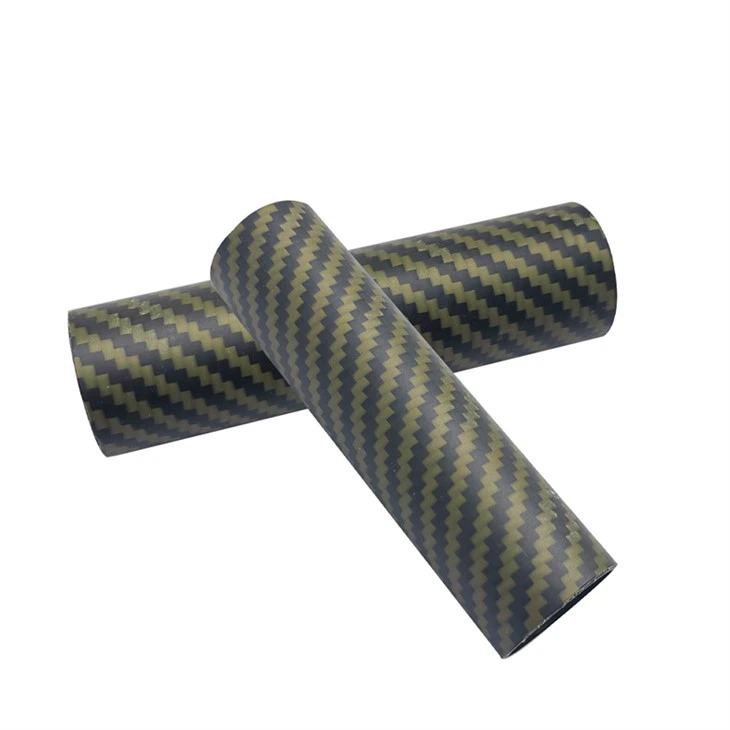
Kevlar is lightweight, strong, and comfortable. Kevlar fiber has a tensile strength close to that of carbon fiber. It has modulus between that of glass and carbon fibers and lower density than both. Kevlar is known for it's heat resistant properties making it a good choice in high-heat settings.
Kevlar and carbon fiber are two forms of synthetic fibers. Both materials have a high strength, the main difference being their use.
Kevlar is primarily used in protective clothing and bullet resistant products while carbon fiber is more prolific in industries beyond the textile world such as boat building and aerospace manufacturing amongst others.
Kevlar has been used by NASA to make gloves and hats that keep astronauts safe when space walks occur during missions outside of earth's atmosphere while Carbon Fiber has been used in boat manufacturing to make boats lighter and stronger amongst other uses.
Which is the Best One for Me? It depends on what you're going to be using it for.
Kevlar is lighter and more comfortable but not as strong as carbon fiber. Kevlar has been used in the medical field, military applications like bullet resistant clothing, protective gear such as firefighter suits or helmets at construction sites where high temperatures are common amongst other uses.
Carbon Fiber has been more commonly used in industries such as boat building, aerospace manufacturing, and to produce very stiff lightweight structural components, whereas Kevlar is primarily seen in protective clothing now due to its high tensile strength which is good for things like bullet resistant clothing
Different Ways of Connecting Carbon Fibre Materials
There are various connection methods for composite connections, which need to be selected according to the load characteristics applied to different connection areas, etc. At this stage, the main methods of carbon fibre composite connection are mechanical connection and adhesive connection.
Glued joints
A glued joint is the joining of two or more members together with an adhesive. Today, glued joints are generally divided into 3 categories: co-curing, co-gluing and secondary gluing. However, when we usually refer to glued joints, we usually mean secondary glued joints or co-glued joints. The performance of co-curing preformed glued joints is much better than that of co-glued joints. Glued connection form can be divided into two main categories: plane-type lap and orthogonal form of connection. Plane-type laps are mainly subjected to in-plane tensile loads, and the adhesive layer is subjected to shear forces, which are mostly used for the connection between plate members in aircraft structures; orthogonal-type laps are mainly subjected to out-of-plane tensile loads, commonly known as pull-off loads, which are mainly used for the connection between plate members and beams, ribs, trusses, and so on.
Mechanical connection
A mechanical connection is a method of joining two or more connected members together using mechanical means, usually bolts and rivets. Commonly used mechanical connections in aircraft structures include bolts, rivets, blind fasteners and ring groove rivet connections. The mechanical connection of carbon fibre composite structure exists a variety of connection forms, according to the different stresses of its fasteners can be divided into single shear and double shear two categories; according to the connection with or without lap plate to connect the transition role, divided into lap and butt; each connection form there will be a corresponding form of slash connection, the selection of carbon fibre composite material mechanical connection form should pay attention to: single shear lap form there will be a certain bending Deformation, will reduce the connection strength, reduce the efficiency of the connection, therefore, the connection design should be used in the form of double-shear connection; due to the existence of bending stress, for the asymmetric single-lap connection structure, should be used for multi-row nail connection, and increase the row spacing; carbon fibre resin-based composite material multi-row fasteners connected to the presence of load distribution of serious non-uniformity, it should be noted that it is not appropriate to use the number of rows of nails too much of the structural form. In the multi-peg connection structure, in order to improve the connection strength of the structure, especially the fatigue strength, the location of the bolt holes try to use parallel arrangement, avoid staggered arrangement; reasonable design of the variable thickness plate slash type connection can improve the load carrying capacity of the connection structure, and the slash connection form will make the load carrying capacity decrease when it is not reasonably designed.
Our Factory
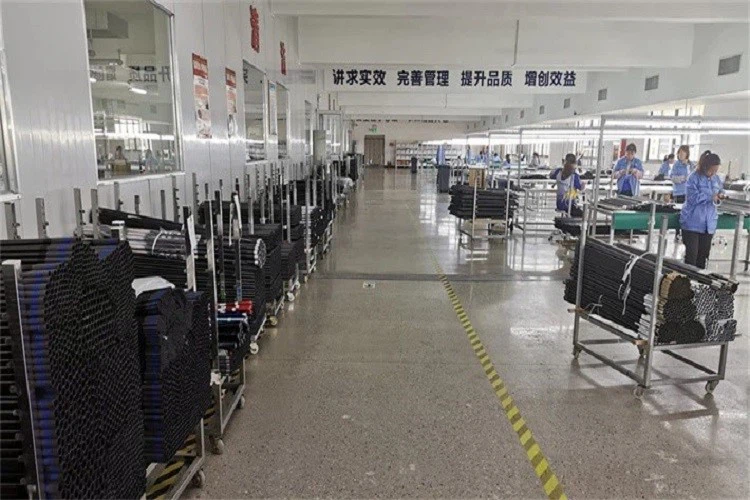
Shandong Runfeng CFRP Co., Ltd was founded in 2010, and located in Shandong, China. We assist customers in the development and manufacture of carbon fibre, glass fibre, and aramid fibre products. Our products are widely used in areas of high-end industrial machinery, medical equipment, intelligent robot, security equipment, transportation, marine antenna, sporting goods, photography facilities, etc. With superior facilities, advanced technology and good quality, we provide one set-up customization service from designing, mold making, prototyping, testing, producing to transportation.

FAQ
We're professional kevlar tubes manufacturers and suppliers in China, specialized in providing high quality products and service. Please rest assured to buy customized kevlar tubes at competitive price from our factory. Contact us for more details.
carbon kevlar weave tube, plain weave carbon kevlar tube, carbon kevlar tube