

What is Carbon Driveshafts?
Carbon fiber driveshafts are used in many industries, including automotive, commercial, defense, industrial, and marine, because of their unique capabilities. They are often used in specialized fields and can be lighter and safer than traditional materials.
Why Choose Us
High Quality
The main business is to produce various kinds of pultrusion, roll-wrapped, filament winding products based on carbon fiber, fiberglass and other advanced composite material.
Rich Experience
We can control the production process with our superior facilities, advanced technology and rich experience, and provide customization service from designing, processing, prototyping, testing to producing.
Quality Control
We have standard quality control system for each manufacturing process and make 100% inspection of the finished product before packed. Small quantity order is acceptable.
24H Online Service
We usually reply emails within 24 hours. If you need any support regarding our products, please contact us immediately.
-

Carbon Fiber Rroller
The carbon fiber roller is a high-performance, lightweight, and durable component designed for various vehicles and industrial applications. Perfectly tailored to your specifications, this carbon Add to Inquiry -
Carbon Fiber Drive Shaft
The carbon fiber drive shaft is a high-performance, lightweight, and durable driveshaft solution tailored for a wide range of vehicles and machinery. Designed to enhance power transmission efficiency Add to Inquiry -
Carbon Fiber Drive Shafts
With greater capability for torque, the Carbon fiber drive shafts are Better RPMThey have Excellent dependability and Enhanced SafetyTheir weight is Super lightweight and reduces vibration, Add to Inquiry -
Carbon Fiber Driveshafts
Our Carbon Fiber Driveshafts has the characteristics of light weight, high efficiency, low vibration, low noise, easy maintenance and energy saving, compared with the traditional metal transmission Add to Inquiry
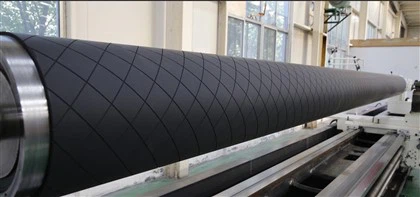
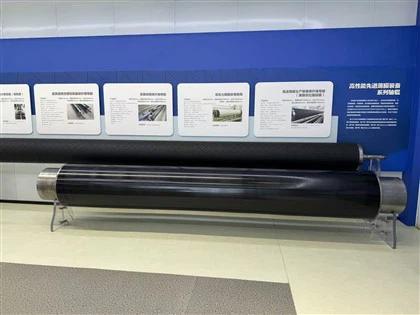
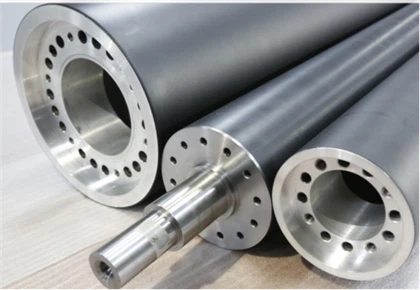
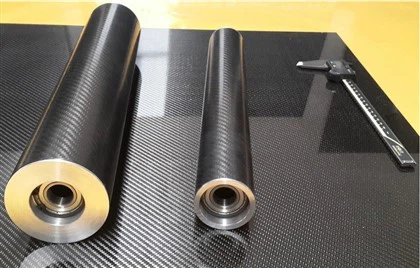
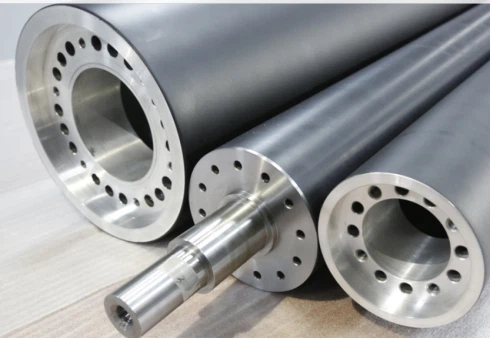
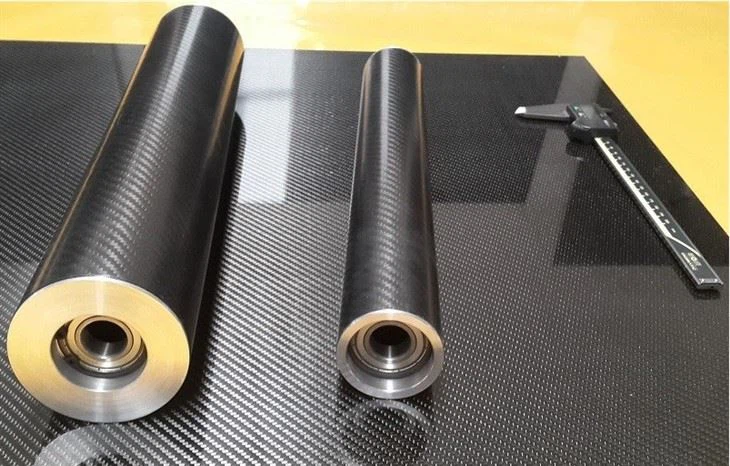
The main body of our carbon driveshafts is made of carbon fiber filament winding, and the outside could be covered with UD carbon fiber cloth or 3K carbon fiber cloth so that the appearance has more choices and better uniformity of the roller body. we will make the calibration with a dynamic balancer before shipment. When the speed reaches 1200rpm, the runout of the roller body is within 0.03mm.
Advantages of Carbon Driveshafts
Safety
Carbon fiber driveshafts are safer than steel or aluminum driveshafts because they break into fibers instead of sharp edges if they snap. This can help prevent damage to the driver or other parts of the vehicle.
Weight
Carbon fiber driveshafts are lighter than steel or aluminum driveshafts, which can help improve a vehicle's performance. Lighter vehicles can accelerate, turn, and stop more easily.
Torque capacity
Carbon fiber driveshafts have a higher torque capacity than steel or aluminum driveshafts, which can help transmit more power to the rear end.
RPM
Carbon fiber driveshafts can also handle higher RPMs than steel or aluminum driveshafts.
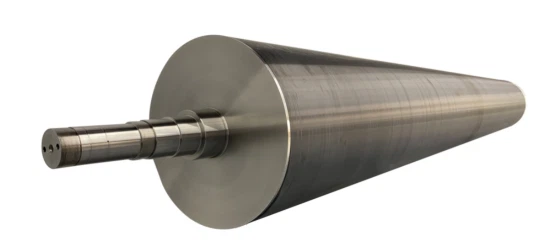
Composite Driveshafts - Custom Carbon Fiber Driveshafts
All of our carbon fiber driveshafts have been built to each customer's specific needs. These composite driveshafts are used extensively in heavy duty applications or where excessive vibrations could destroy a metal drive shaft.
A major benefit of using a composite driveshaft is that in the event you should have a component failure a carbon fiber driveshaft will shred itself rather than cause extensive damage to the vehicle. Talk about strength, they are torque tested beyond 3,900 foot pounds.
Features
Wet filament wound carbon fiber (with no metal substrate) allows longer unsupported spans than are possible with metal tubes. A carbon fiber driveshaft has greater torque capacity and a higher RPM capability than steel or aluminum tube and the lower rotation weight transmits more of the available power to the rear end.
Applications
Carbon fiber (composite) driveshafts are especially effective when used in Heavy Trucks, Diesel Tractors, Refuse Trucks, ect..., where a lot of stress is experienced under heavy loads or quick power applications, It's also a natural choice for auto and heavy dynamometers.
Steel, Aluminum, and Carbon Fiber Driveshafts introduce
A driveshaft transfers power from the transmission to the differential of the car, and the differential then sends power to the rear wheels of your Mustang. A driveshaft is a simple round shaft, uncomplicated and easily ignored, but without a driveshaft, there's no way for your car to efficiently transfer energy into motion. Upgrading your driveshaft isn't a flashy performance upgrade, but it is one that you may need to consider based on your ideal build. Though most cars come with a steel driveshaft, at some point you may decide to replace the steel stock driveshaft with one made out of aluminum or carbon fiber. All three driveshaft materials have pros and cons that make them ideal for different types of drivers.
Steel Driveshafts
By far the most inexpensive option, steel driveshafts have the benefits of being durable and dampening noise and vibrations through your vehicle.
The downsides are that steel is obviously heavy and in addition to contributing unnecessary weight to your vehicle, a steel driveshaft also makes your engine work harder because it has to rotate the heavy driveshaft in order to move the vehicle.
Typically, stock drivetrains will be made out of steel because they require the least maintenance and provide the most comfortable ride for the everyday driver. For many enthusiasts though, the steel drivetrain is one of many things that can be cut to easily save on weight, which makes a difference not only for drag racing but also for many autosports like drifting or autocross.
There are different types of steel driveshafts and they aren't all the same. Chromoly steel tubes are heavy, but they're also very strong and can survive high speeds. On the other hand, seam tube is usually what the stock driveshaft is made out of and though it's inexpensive, it's also pretty weak compared to other steel forms.
Aluminum Driveshafts
Going from a steel to an aluminum driveshaft is one way to decrease the amount of excess weight your car is carrying around as well as to reduce the workload that is being passed along to your engine. Aluminum driveshafts are significantly lighter, and, depending on what year Mustang you have, you could be dropping anywhere from ten to twenty pounds simply by making the swap from steel to aluminum.
Dropping a driveshaft is particularly beneficial since it isn't static weight you'd be dropping but rather rotating weight. This means that it's the equivalent to dropping significantly more weight.
The downside to aluminum is that it's much more fragile than steel, and when aluminum breaks, it shears, creating dangerous sharp edges that could harm your car or even yourself. Aluminum also is a much noisier drivetrain that doesn't reduce vibrations in the same way that steel does. This makes it less comfortable for casual drivers. Aluminum is overall not a very strong metal, and it does poorly at high speeds.
In addition to being light though, Aluminum doesn't respond to weather as negatively as steel does, and so many people in snowier areas are excited to upgrade to aluminum just because aluminum is immune to rust. It should be noted though that aluminum is easily corroded though, so it's important to inspect your aluminum driveshaft regularly.
Carbon Fiber
Carbon Fiber driveshafts offer the greatest weight savings. Though aluminum driveshafts are impressively light, carbon fiber shaves a few additional pounds off. This isn't the greatest advantage of carbon fiber though. Unlike steel or aluminum, carbon fiber doesn't sheer when it breaks. Instead, if it breaks, carbon fiber comes apart in harmless splinters that are unlikely to damage your vehicle.
Carbon fiber is stronger than steel even, and its vibrations are significantly less than aluminum.
In short, it's the perfect material, except for a few small things. Carbon fiber is impossible to repair, it can only be replaced. Unlike steel or aluminum which can be soldered, with carbon fiber if a single strand is damaged than the structural integrity of the whole is irrevocably damaged. This would be tough enough if carbon fiber driveshafts were similarly priced to their steel and aluminum counterparts, but carbon fiber is a specialized material that is difficult to make, so they're also substantially more expensive.
When To Replace Your DriveShaft It's Broken
Okay, that probably sounds obvious, but you'd be surprised how many people accept a terrible ride as simply being the price of driving a vehicle with a few years on it. It doesn't have to be! Signs of a bad driveshaft are typically a lot of noise and a lot of vibration. In particular, driveshafts are associated with a clunking sound that is fairly unique.
Horsepower Upgrades
More power is always awesome, right? Kind of. It depends on how useful all that extra power is, and that means having a driveshaft that's capable of transferring all that horsepower effectively. There's a reason the 2020 Shelby GT500 comes with a carbon fiber driveshaft right off the bat, and that's because when you're throwing down over 700 horsepower you need components that can keep up.
Suspension Upgrades
In general, if you're doing some substantial upgrades on your suspension, then it's a good time to look at your driveshaft and determine if it's still a part of your ideal build. The driveshaft affects your ride as much as any other component of your suspension, and even though it's easy to ignore, considering how inexpensive the upgrades are it really shouldn't be.
Choosing a Driveshaft
Though it may be tempting to simply go for the best, a carbon fiber drivetrain isn't the right choice for everyone. It's the best choice for enthusiasts and people who require a high degree of performance, but will you notice the difference while cruising around the local grocery store parking lot looking for a free space? Most likely not, and in the meantime, you've got a valuable piece of equipment on your car. Aluminum can be a tempting middle ground, but it's lack of durability rules it out for many.
The Craftsmanship of Carbon Fiber Manufacturing
Like other materials, quality carbon fiber starts with a base component: polyacrylonitrile (PAN). 90% of carbon fibers are made out of that. The other 10% – petroleum pitch or rayon.
Manufacturers use a variety of liquids and gases to make carbon fiber. During the spinning, carbon fiber manufacturing PAN mixes with other ingredients to be spun into fibers. Then, fibers will wash and be stretched.
Next comes stabilizing. During this step, fibers being heating for 30-120 minutes to 390-590° F. A few things happen throughout this stage.
First, the fibers get the air's oxygen molecules. In doing so, the atomic bonding pattern rearranges over the course of chemical reactions. The techniques and equipment used in commercial stabilization processes vary from one process to another.
Some processes draw the fibers through heated chambers. Others pass them across hot rollers and through loose materials.
After stabilizing comes carbonizing. Stabilized fibers heat into a sweltering 1,830-5,500° F furnace for many minutes with an oxygen-less gas mixture. The absence of oxygen stops the fibers from burning.
Heating the fibers makes them drop their non-carbon atoms and even some carbon atoms. That takes the form of gases like ammonia, water vapor, carbon dioxide, carbon monoxide, nitrogen, hydrogen, and more. While the non-carbon atoms flee, the carbon atoms remaining make closely bonded carbon crystals.
The manufacturing process doesn't stop there. Once the fibers carbonize, the surface somewhat oxidizes. Adding oxygen atoms to the surface allows for more chemical bonding. It also roughens and etches the surface to facilitate better mechanical bonding.
Manufacturers oxidize fibers by putting them in carbon dioxide, air, ozone, or other gases. Or they use liquids like nitric acid or sodium hypochlorite.
Fibers can also be made the positive terminal in a bath of electrically conductive materials to coat them electrolytically. At all times, manufacturers must carefully control the surface treatment to prevent pits and other small surface defects from forming. These could cause the fiber to fail.
The final step in the carbon fiber manufacturing process is sizing. That's the process of coating the fibers to safeguard them against damage during weaving or winding. Coating materials work with the adhesive used in making composite materials.
The coated fibers are then wound by hand onto bobbins during the final mini-steps of making the handmade products. Finally, bobbins spin within the machine, and the fibers become yarn.
Our Factory
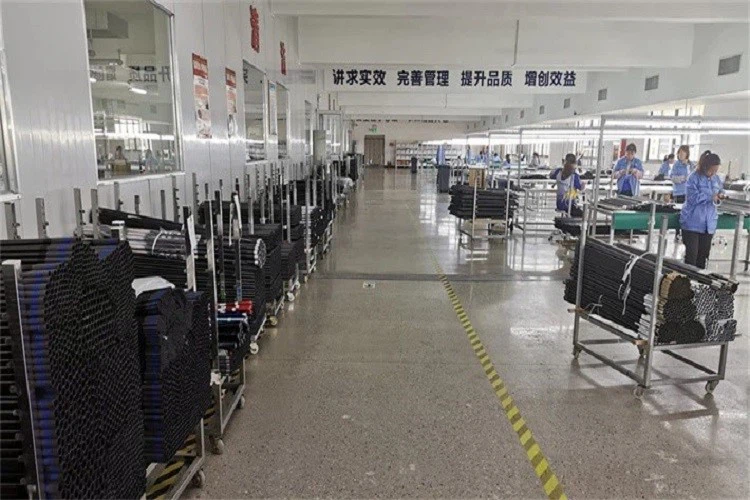
Shandong Runfeng CFRP Co., Ltd was founded in 2010, and located in Shandong, China. We assist customers in the development and manufacture of carbon fibre, glass fibre, and aramid fibre products. Our products are widely used in areas of high-end industrial machinery, medical equipment, intelligent robot, security equipment, transportation, marine antenna, sporting goods, photography facilities, etc. With superior facilities, advanced technology and good quality, we provide one set-up customization service from designing, mold making, prototyping, testing, producing to transportation.

FAQ
We're professional carbon driveshafts manufacturers and suppliers in China, specialized in providing high quality products and service. Please rest assured to buy customized carbon driveshafts at competitive price from our factory. Contact us for more details.
carbon fiber shaft technologies, Carbon fiber rollers, Custom carbon rollers